Sam Keller · 14 October 2026
Investigating the Effects of Minor Elevation Variations on Amphibian Breeding Site Selection in Vernal Pools
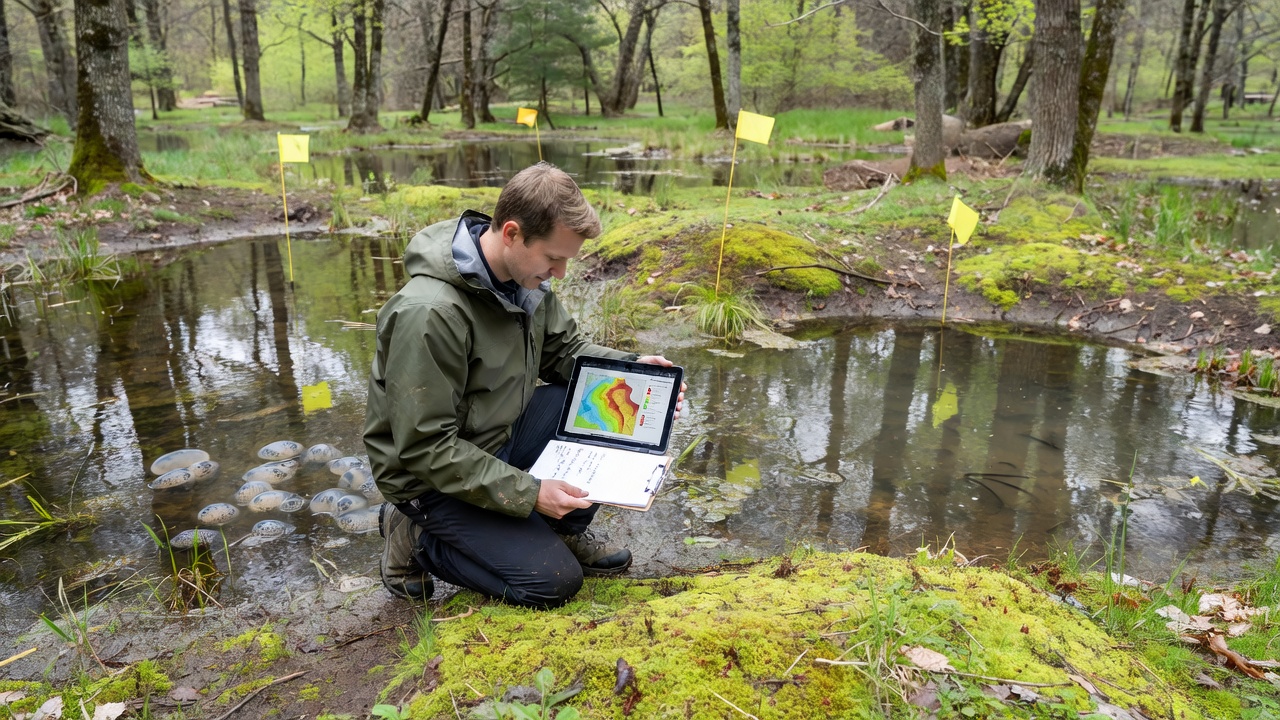
Researchers have documented how small differences in ground height within vernal pools influence where amphibians choose to lay eggs and complete their life cycles, and these patterns emerge from detailed terrain surveys combined with field observations across multiple regions. Vernal pools form in shallow depressions that fill with water during spring rains then dry by summer, creating temporary habitats free from fish predators yet dependent on precise water depth and duration for successful breeding. Minor elevation shifts of just a few centimeters alter hydroperiod length, soil moisture gradients, and vegetation zones, which in turn guide species such as wood frogs, spotted salamanders, and spring peepers toward specific micro-sites for reproduction.
Understanding Vernal Pool Topography and Water Dynamics
Data collected through high-resolution LiDAR mapping and ground-based leveling shows that pools with varied micro-elevations maintain distinct zones of standing water that persist for different lengths of time, and amphibians respond by selecting oviposition sites where conditions match larval development needs. Studies conducted in the northeastern United States and parts of southern Canada reveal that egg masses of certain salamanders cluster more densely along the lower contours where water remains deepest longest, whereas frog species often favor slightly higher benches that warm faster and support earlier hatching. These preferences become measurable when researchers track water level recession rates against elevation profiles, producing datasets that link topography directly to breeding success rates recorded over multiple seasons.
Field teams in October 2026 completed baseline surveys ahead of predicted precipitation changes, and those efforts supplied updated elevation models that feed into predictive tools used by wetland ecologists. Equipment placed at pool edges recorded temperature and dissolved oxygen at 5-centimeter vertical intervals, confirming that even subtle rises create measurable differences in thermal regimes that affect embryo viability. Observers note that pools lacking such micro-variation tend to support fewer species overall, while those with gentle slopes host overlapping breeding events staggered by location within the basin.
Methods Used to Measure Elevation Effects
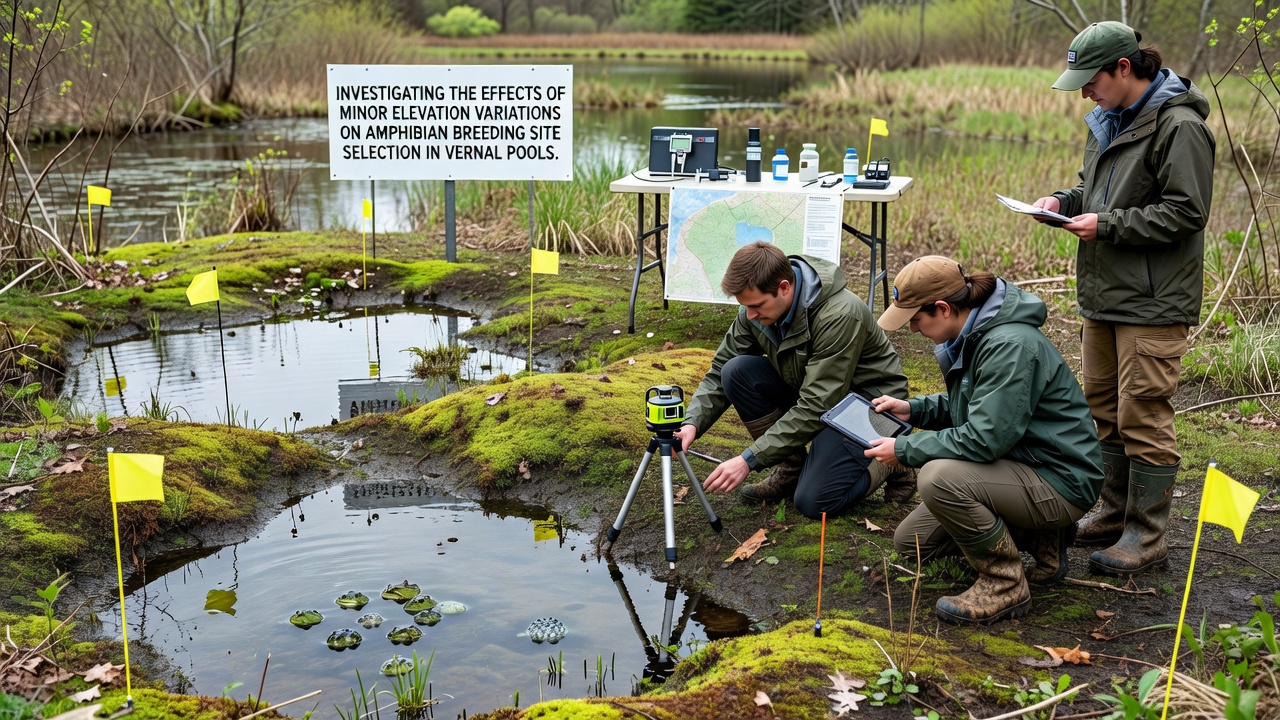
Investigators combine drone-based photogrammetry with traditional survey transits to generate digital elevation models accurate to within 2 centimeters, then overlay these layers with amphibian egg count data gathered during peak breeding weeks. Software processes the point clouds to calculate slope angles and depression volumes, allowing teams to simulate how a 10-centimeter rise shifts the waterline and shortens hydroperiod by several days. Acoustic monitoring stations deployed around pool perimeters capture calling activity that correlates with elevation bands, providing temporal records of arrival and chorus intensity without disturbing the sites.
One ongoing project coordinated across three states uses standardized protocols that include repeated visits every 48 hours during spring thaw, and the resulting time-series data illustrate how species partition the available space according to elevation. Genetic sampling of larvae from different contour lines further demonstrates limited mixing between cohorts raised at contrasting heights, suggesting site fidelity that persists across generations. Collaboration with regional conservation agencies supplies additional context from long-term monitoring plots established decades earlier.
Species-Specific Responses to Micro-Elevation Gradients
Wood frogs deposit egg masses preferentially in the central, lowest portions of pools where depths exceed 25 centimeters for at least four weeks, according to records maintained by the U.S. Geological Survey. Spotted salamanders show greater tolerance for peripheral zones that experience partial drying yet still retain enough moisture for metamorphosis, and spring peepers occupy intermediate elevations where emergent vegetation provides attachment points for eggs. These distributions shift measurably when elevation profiles change due to sediment deposition or minor erosion, prompting researchers to revisit sites annually and update habitat suitability maps.
Comparative work in Australian temperate wetlands and European temporary ponds yields parallel findings, with local anuran species selecting breeding locations based on comparable micro-topographic cues. Data from Environment and Climate Change Canada indicates that pools restored with engineered micro-variations achieve higher occupancy rates than flat-bottomed basins of similar size. Such outcomes underscore the role of elevation in maintaining biodiversity within ephemeral wetland networks that face pressure from surrounding land use.
Implications for Habitat Management and Future Research
Land managers apply elevation data when designing restoration projects, incorporating subtle grading to recreate natural contours that support multiple amphibian species simultaneously. Predictive models now integrate climate projections for 2027 onward, estimating how altered rainfall patterns might interact with existing micro-topography to change breeding windows. Continued monitoring at established reference sites supplies calibration points for these models and tracks whether species adjust selection patterns in response to cumulative environmental shifts.
Additional variables under study include canopy cover, soil type, and predator presence, each interacting with elevation to shape final site choices. Researchers coordinate data sharing through international networks that standardize measurement units and reporting formats, enabling cross-continental comparisons of micro-elevation effects on amphibian communities. These collaborative efforts continue to refine understanding of how small physical differences translate into significant ecological outcomes within vernal pool systems.
Conclusion
Comprehensive investigation of minor elevation variations demonstrates consistent patterns in amphibian breeding site selection across vernal pools, driven by measurable differences in water persistence, temperature, and vegetation structure. Ongoing data collection through 2026 and beyond provides the foundation for refined management approaches that preserve these subtle topographic features. The accumulated evidence supports continued investment in high-resolution mapping and long-term field studies to sustain amphibian populations dependent on these dynamic habitats.